🛑 Safety First
Winching mistakes can cause serious injury or death. Slow down, set the zone, and never rush a recovery.
🔗 External References
Personal Protective Equipment (PPE)
- Heavy-duty gloves required (steel or synthetic line).
- Eye protection recommended for all operators and spotters.
Recovery Zone Rules
- Establish a danger zone at least 2× the total winch line length.
- No bystanders inside the safety zone.
- Never step over or straddle a tensioned line.
Line Safety
- Install a line dampener at midline for every pull.
- Never touch the line, hook, or hardware under tension.
Prohibited Actions
- Never attach to a ball hitch.
- Never tow with a winch.
- Never rush a recovery.
Anchor & Rigging Setup
Approved Anchors
- Live, sturdy tree (use a tree saver).
- Large, stable boulder.
- Another vehicle’s rated recovery points.
Anchor Rules
- Do not use dead, small, or unstable trees.
- Anchor must exceed the expected load.
Attachment Points
- Use rated shackles or recovery hooks only.
- Never attach to suspension or steering components.
Winch Line Management
- Minimum 10 wraps on the drum at all times.
- Avoid line bunching or side loading.
- Protect line from sharp edges and abrasion.
Snatch Block Operations
When to Use
- Heavy or deep recoveries.
- Angled pulls.
- Winch overheating risk.
- Solo self-recovery.
Applications
- Double-line pull reduces load on the winch motor by roughly 50%.
- Redirected pull allows recovery when a straight pull is not possible.
Snatch Block Safety
- Anchor load increases — verify strength.
- All components must be rated for the load.
- Line speed is reduced by half (plan for longer pulls).
Winching Procedure (Field Checklist)
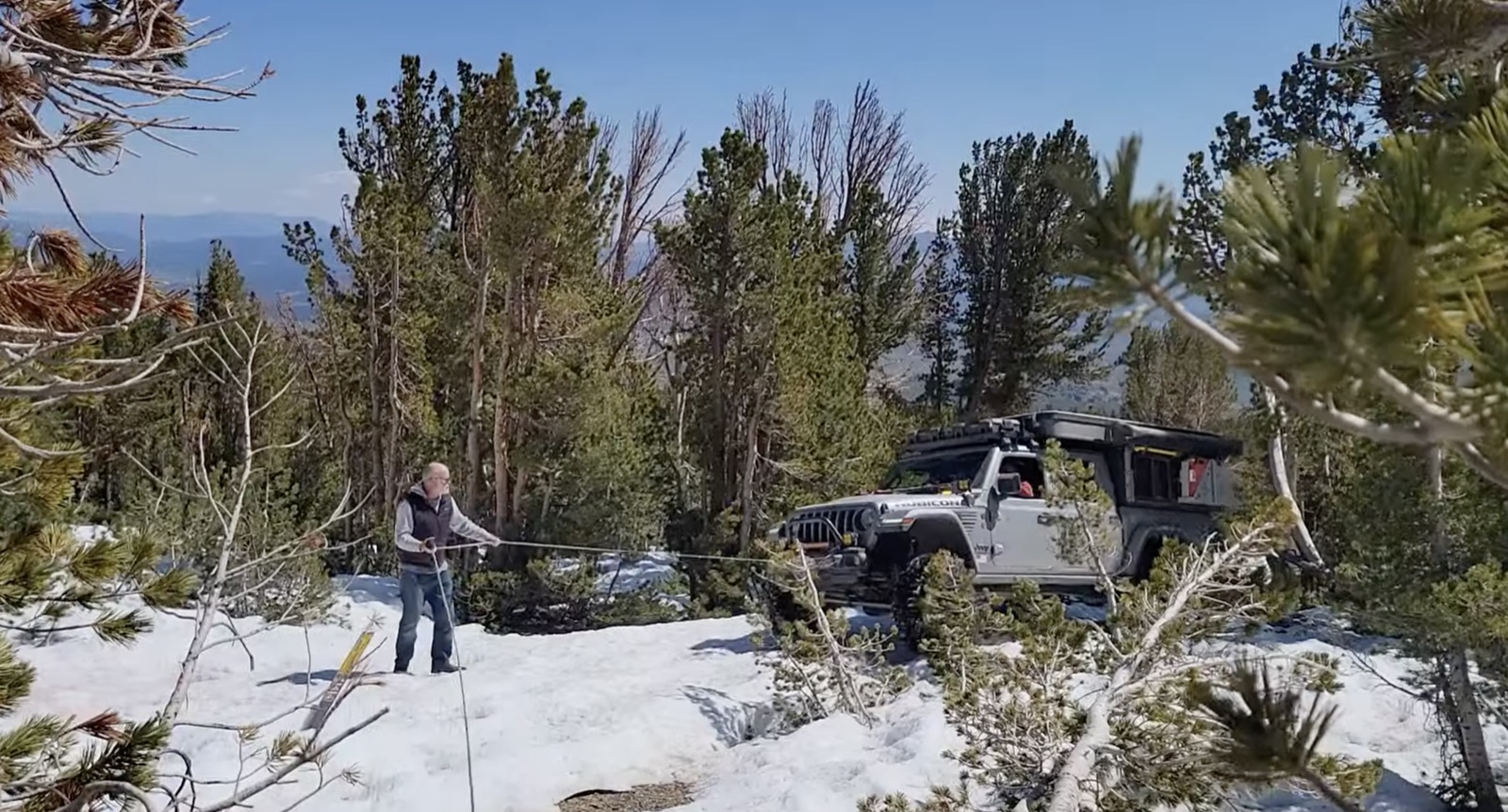
- Assess: Identify why the vehicle is stuck and choose the safest anchor.
- Unspool: Pull line smoothly, avoid twists or kinks, and secure to the anchor.
- Tension: Slowly take up slack and recheck all connections.
- Pull: Use short, controlled bursts and monitor winch temperature and line alignment.
- Driver Assist: Gentle throttle only and maintain clear communication.
⚠️ Common Failure Points
- Continuous pulling causing overheating.
- Dragging line over rocks or sharp edges.
- Touching loaded hardware.
- Standing inside the danger zone.
- Using low-quality or unrated gear.
Winch & Line Selection
Winch Capacity
- Rule of thumb: GVWR × 1.5 (per WARN Industries guideline).
Steel Rope
- Pros: Extremely durable, abrasion resistant, UV stable.
- Cons: Heavy, rust-prone, sharp burrs.
Synthetic Rope
- Pros: Lightweight, easier handling, lower stored energy.
- Cons: UV and abrasion sensitive, requires frequent inspection.
Inspection & Maintenance
Before and After Every Use
- Inspect winch line for cuts, frays, or kinks.
- Check shackles and snatch blocks for cracks or stress marks.
- Ensure snatch block bearings spin freely.
Accessories
- Tree savers free of cuts or fraying.
- Dampers intact and ready to deploy.
- Remote controls tested.
Synthetic Line Care
- Wash with mild soap and water.
- Dry completely before storage.
✅ Recovery Gear Standards
- Use quality, rated recovery gear only.
- Avoid cheap cast hardware.
- Always use tree savers and dampers.
- Expedition leader controls the safety zone.
FAQ
- Can I winch from a ball hitch? No. Use rated recovery points only.
- How many wraps should stay on the drum? Minimum of 10 wraps.
- Why use a line dampener? It reduces recoil if the line fails.
- Should I keep the vehicle in gear? Follow driver-assist guidance and use gentle throttle only.
Solid Reference Resources
- X Overland - Winches and How to Use Them
- James Baroud - Get Unstuck: Practical Winch Tips for Overlanders
Slow down and reassess often. Safe recoveries protect people, vehicles, and the environment.